Facts about this Gurudwara
From settlement to sacred centre
The SGPC history of Sri Harmandir Sahib connects the development of the sarovar and town with Guru Ram Das, and the sanctuary with Guru Arjan. It records the installation of the Adi Granth in 1604. These milestones bring city, building and scripture into the same story.
A helpful question is therefore not simply who built the Golden Temple, but what kind of place was being created. A settlement gives people a shared everyday setting; a place of worship gives that setting a spiritual focus. Read the early history with both in mind. The relationship is more revealing than imagining a finished monument arriving all at once, separate from the people around it.
The centre is scripture
For a visitor unfamiliar with Sikh practice, the building can command attention so completely that the focus of worship becomes less obvious. The Guru Granth Sahib is central. The sanctuary should therefore be approached as a place of reverence, rather than as a decorative room at the end of a queue. Even a brief pause to understand this changes how one enters and where one directs attention.
The word darshan can be understood here as a reverential visit or beholding. It need not become a race to reach the front or collect the best photograph. You can prepare by learning a little about the role of scripture before arriving. If something is unfamiliar during the visit, listen carefully and ask a sevadar at a suitable moment instead of interrupting worship.
An architecture of approach
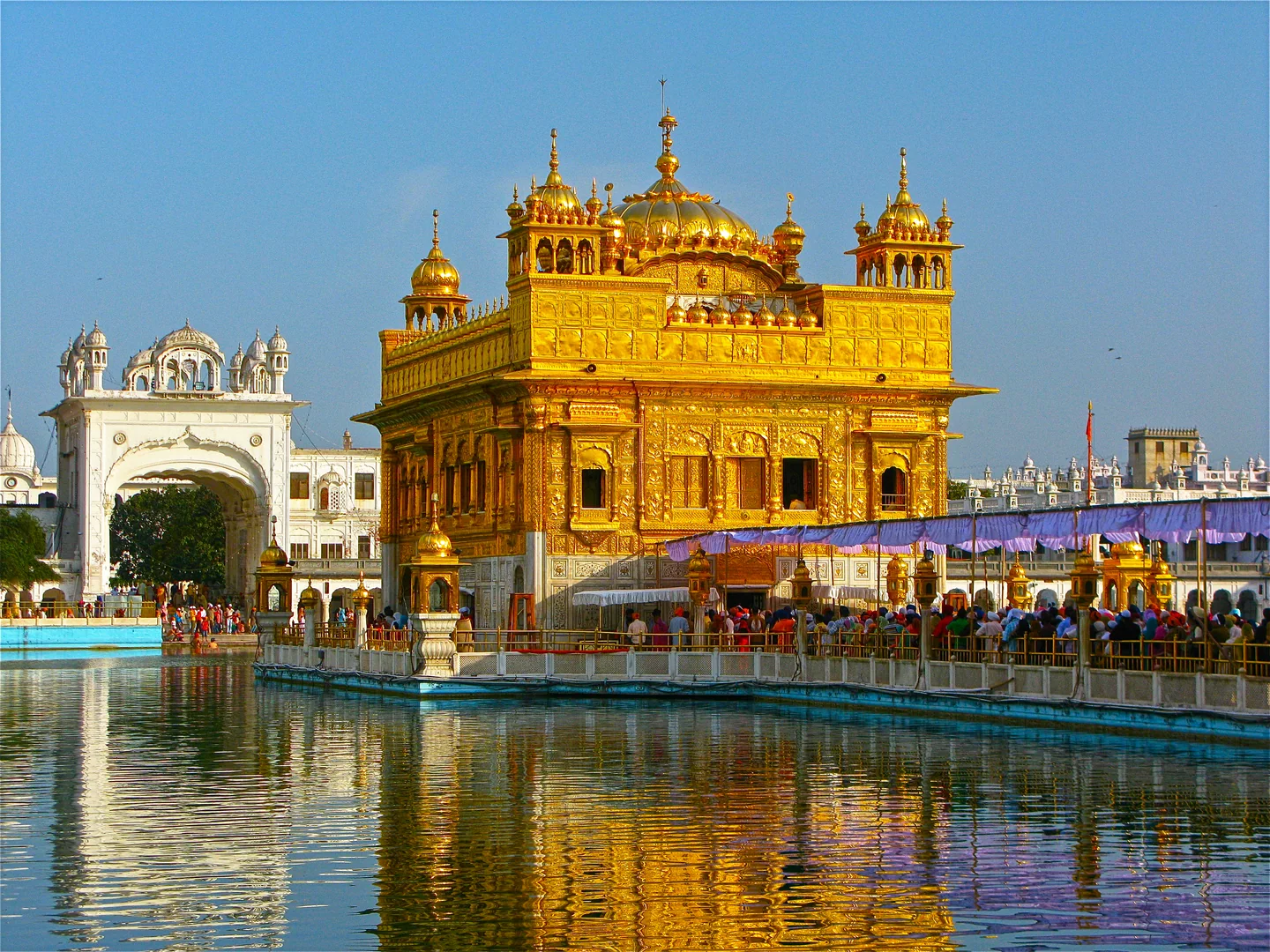
The SGPC account describes the sanctuary’s lower setting and openings on four sides as expressing access without distinctions of caste, creed, sex or religion. The ICOMOS evaluation held by UNESCO describes the sacred precinct as a pond surrounded by buildings serving different functions, with the sanctuary at its centre.
These descriptions suggest a useful way of looking: pay attention to relationships, not only surfaces. Notice how an approach, a threshold and a shared walking space shape the experience of arriving. This is an invitation to observe respectfully, not a claim that every detail has one fixed symbolic meaning. Architecture can encourage reflection without requiring visitors to turn every doorway or reflection into a dramatic explanation.
History includes rebuilding
The shrine’s history includes destruction, recovery and renewed care. The SGPC overview recounts repeated eighteenth-century attacks and subsequent restoration, and notes Maharaja Ranjit Singh’s interest in its development and embellishment. Those episodes explain why the site cannot be understood through a single construction date.
It is equally important to avoid treating violence as colourful background for a holiday photograph. For many families, histories of loss and defence remain personal and religious memories. When discussing them, use precise names and periods rather than blaming whole present-day communities. If a source uses sweeping language, a responsible retelling can preserve the event while avoiding that generalisation. Rebuilding is also a story about work, resources and responsibility, not only an opportunity for a stirring final sentence.
Langar as a shared responsibility
The Amritsar district’s visitor information describes langar as a communal meal open without distinctions of colour, creed, caste or gender, and asks visitors to remove shoes and cover their heads. The practical details are simple, but their meaning deserves attention: a shared meal asks people to make room for one another.
Approach langar with the manners you would bring to any carefully run community space. Follow local guidance, accept an appropriate portion and avoid wasting food. If you would like to help, ask which task is suitable before joining in. Seva means service; it is not a performance to be filmed. A useful contribution may be quiet, ordinary and invisible in the photographs you take home.
Prepare for people, not only landmarks
Before travelling, discuss practical needs with everyone in your group. A person who tires easily may need a slower pace, a child may need an explanation of head covering, and a first-time visitor may feel uncertain about sitting in the prayer hall. Preparing together is kinder than expecting everyone to understand an unfamiliar setting immediately. Bring a secure head covering and choose clothing that allows comfortable, respectful movement.
Confirm current arrangements directly through official information and on-site staff. Queue conditions, access routes and photography instructions can change. Do not build an important family visit around an unverified opening-hours graphic or a promised quiet moment. Allow room in your day to wait, rest or shorten the route. A meaningful visit need not include every nearby shrine in one attempt.
Write down an official contact or meeting point before setting out, especially if members of your party use different phones. Small practical preparations can leave more attention available for the visit itself.
Listen without demanding an experience
There is no correct emotion that every visitor must feel here. Some arrive with a lifelong family connection; others are learning about Sikh tradition for the first time. Some may be grieving or carrying private concerns. A respectful guide should leave space for all of them, without promising that entering a sacred place will resolve illness, distress or difficult circumstances.
Keep phones unobtrusive and let worshippers retain their privacy. Do not photograph a stranger’s prayer merely because the scene seems moving. If you hear a Punjabi term you do not understand, write it down afterwards and look for a reliable explanation. Curiosity works best when it does not make the people around you responsible for an immediate lesson. Quiet attention is already a useful beginning.
Continue through Amritsar thoughtfully
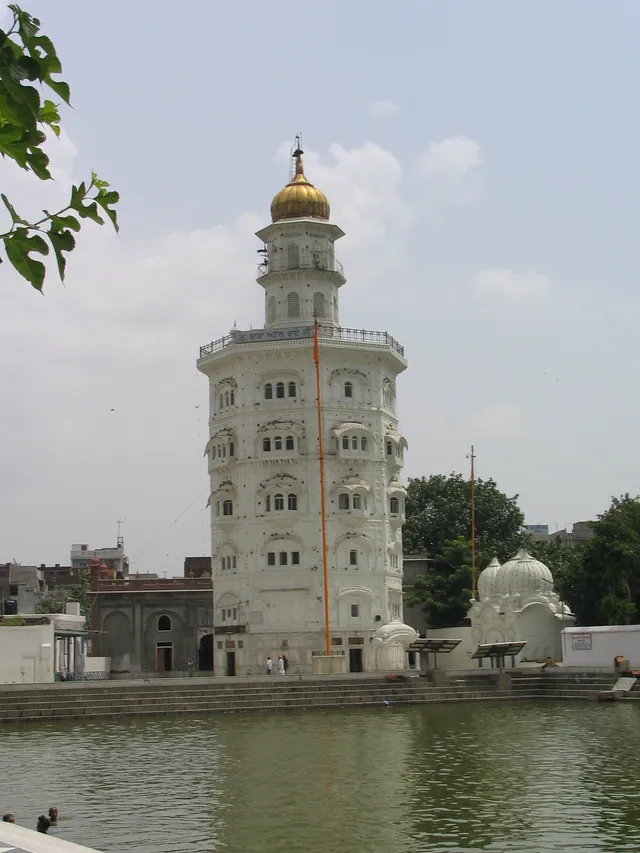
The wider city adds different dimensions to this history. Read about Ramsar Sahib and the preparation of the Adi Granth, or explore Baba Atal Sahib’s memorial architecture. These places should not be reduced to extra stops added to fill a day. Each deserves its own context, and visiting fewer places with a little understanding may be more rewarding than hurrying through many.
Use the gurudwara directory to compare places before deciding what fits your journey. If you are exploring the options offered through Meri Sukhna, the customization page is a starting point for reviewing your preferences. Keep practical arrangements distinct from religious expectations: no booking, donation or itinerary can guarantee a spiritual outcome. Carry the learning into everyday conduct, where consideration for other people remains just as necessary.
Sources & further reading
Historical details are linked to their sources. Devotional traditions are identified as traditions; current arrangements should be confirmed locally.