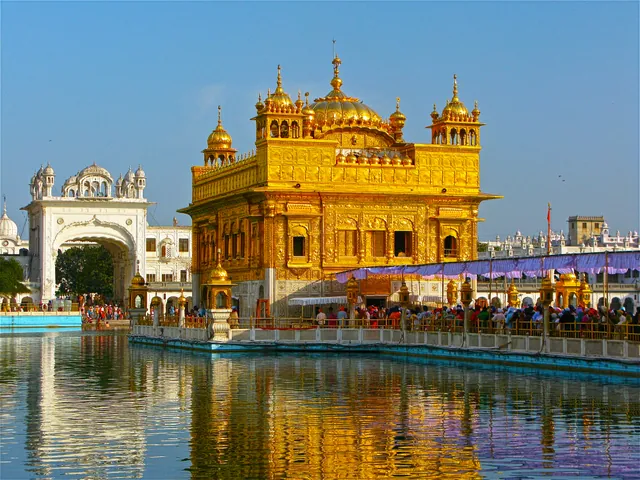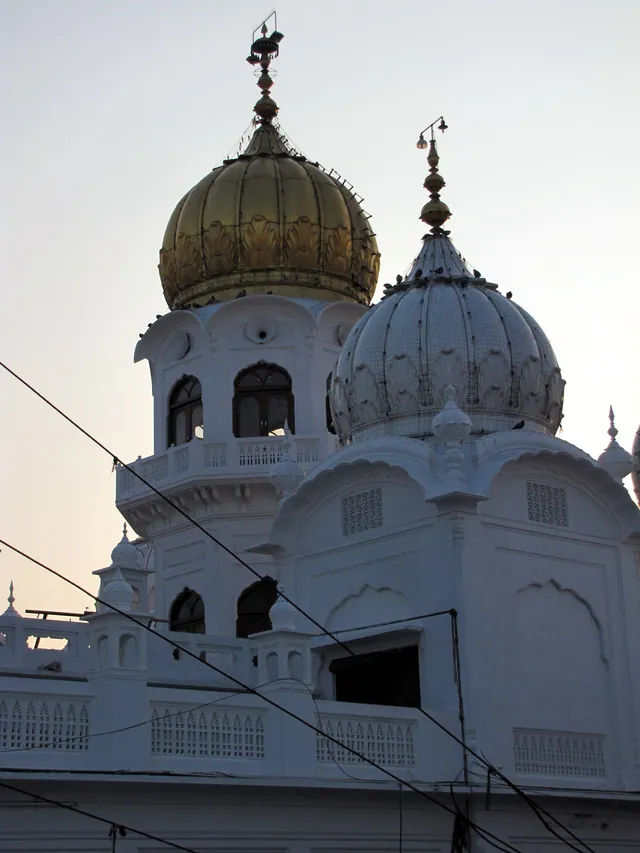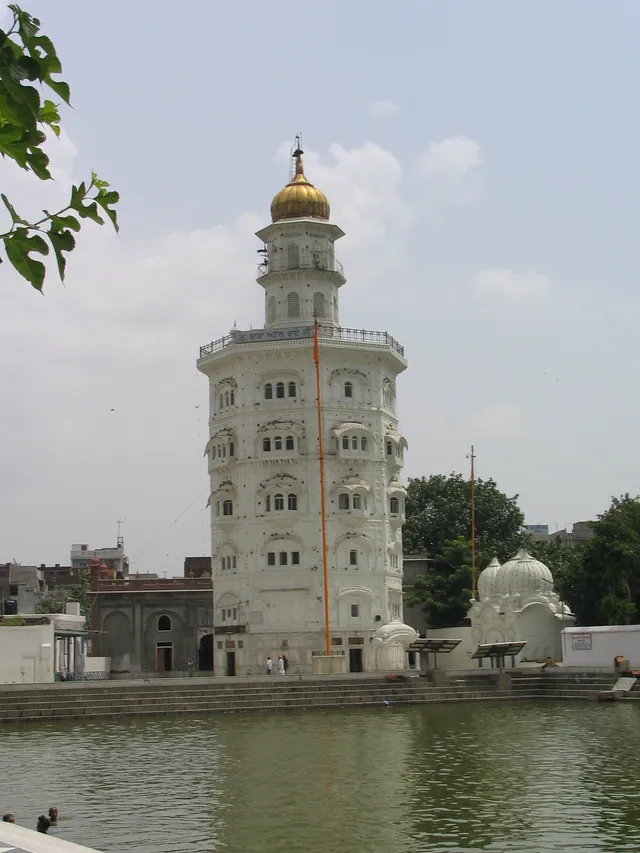
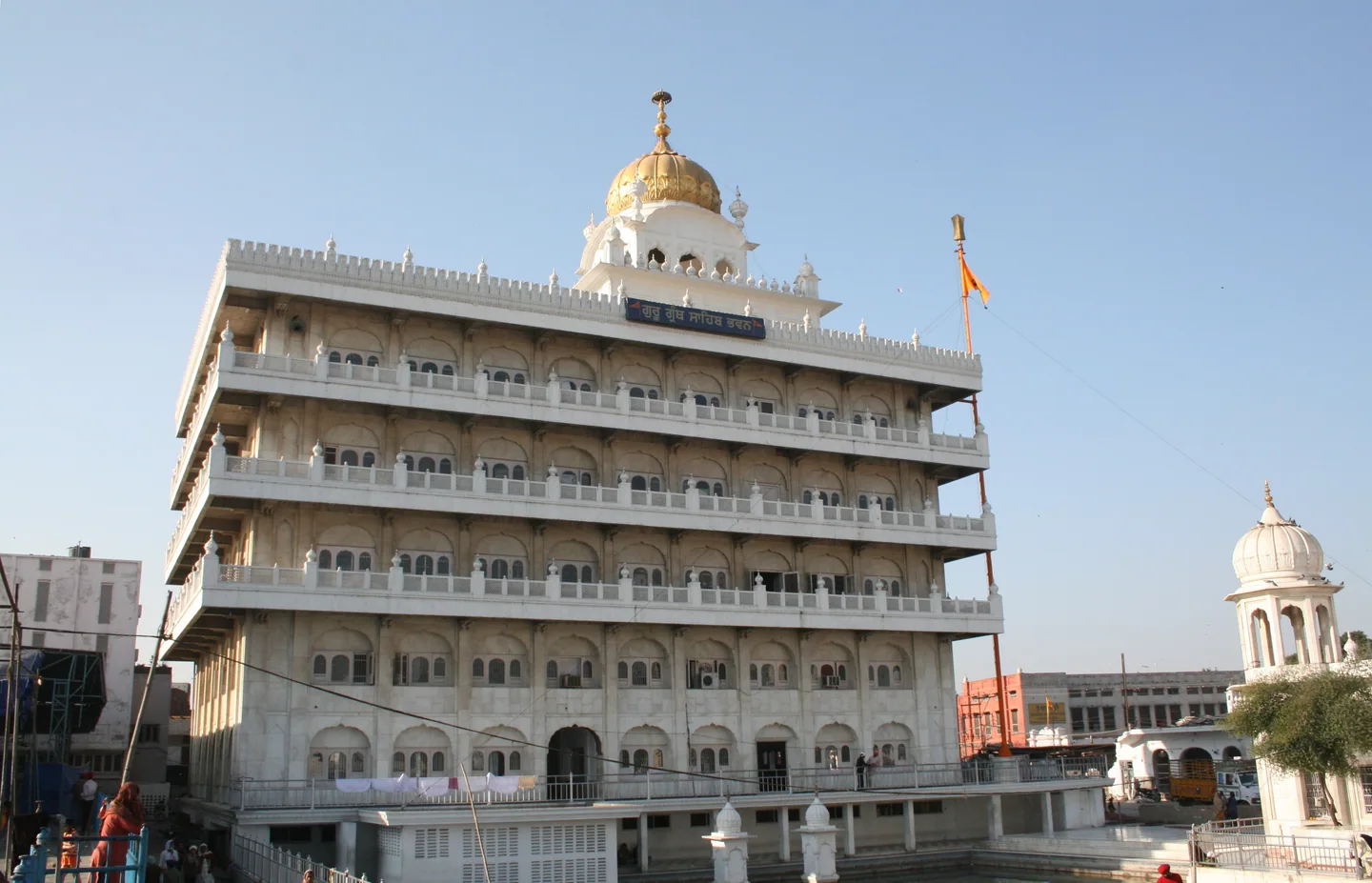
Facts about this Gurudwara
The connection with scripture
Guru Arjan’s compilation of the Adi Granth is the essential historical context for Ramsar Sahib. A Tribune report on SGPC work at Ramsar identifies the gurudwara as the place of that compilation, and distinguishes the Adi Granth from the later expanded Guru Granth Sahib. This report is used for that specific connection, rather than as a source for an elaborate reconstruction of the writing process.
It is tempting to turn such an association into a vivid scene, complete with weather, conversations and the exact appearance of a writing place. Unless evidence supports those details, they belong to historical fiction. The documented connection is significant enough without invented atmosphere. It asks us to consider the care involved in preparing a text that would occupy a central place in religious life.
Ramsar and Harmandir belong in one account
The SGPC’s report of first-Parkash commemorations describes a religious procession from Gurudwara Sri Ramsar Sahib to Sri Harmandir Sahib. It also recalls the 1604 compilation and first installation of the scripture at Harmandir Sahib. The report makes the connection visible through a community observance, rather than leaving it as an isolated historical fact.
A procession can be read as a form of remembering through movement: an association between places is renewed by people travelling together. That is an interpretation of the reported event, not a claim about every year’s programme or a promise that a visitor will encounter it. Check current official notices for any particular commemoration. A past report should never be turned into a fixed annual timetable without verification.
Why the name Adi Granth matters
Historical vocabulary deserves the same care as a place name. When discussing the compilation associated with Guru Arjan, the term Adi Granth helps distinguish that historical stage from later developments. For a general reader, the point is not to memorise terminology for its own sake. It is to avoid collapsing a long religious history into one undifferentiated moment.
A useful reading habit is to notice when an author uses a familiar present-day name to describe an earlier event. Sometimes that is an understandable shorthand; sometimes it hides a distinction that matters. Ask which period is being discussed and what the source actually says. If you are explaining the history to family, a short clarification is often enough. There is no need to turn a first introduction into an examination of dates and technical terms.
Preservation is part of the story
The SGPC’s March 2018 gazette identifies Sri Guru Granth Sahib Bhawan in the Ramsar Sahib complex in connection with the respectful handling of old and newly published sacred volumes. This is evidence of the complex’s scriptural role beyond the historical association with compilation.
For visitors, the important lesson is that preservation has practical responsibilities. Sacred texts are not ordinary souvenirs or props, and spaces connected with their care should not be treated as casual attractions. Do not assume that an association with publication means there is a public printing tour or an opportunity to handle a sacred volume. Follow current instructions and ask a respectful question if you wish to understand the work. Access, if offered, must be defined by those responsible for it.
Learning without pretending to know Punjabi
An English-speaking visitor may worry that limited Punjabi will make the visit meaningless. Begin with what you can understand: the name of the place, its historical association and the reverence people show. Then build your knowledge gradually. Sangat means the congregation or gathered community; it is a useful word because it points beyond a solitary visitor’s experience towards the people who share religious life.
If you consult a translation of scripture afterwards, choose a reputable edition and remember that translations involve interpretation. Do not lift a line from an image online and assume it is correctly attributed or fully explained. A short, carefully understood passage is better preparation than collecting impressive phrases you cannot identify. There is no need to imitate fluency, and honest questions are more useful than invented confidence.
A different pace for a history visit
At a site connected with textual preparation, it can be useful to arrive with one question instead of a long checklist. You might ask why compilation matters, how a community preserves sacred writing or how a place continues to carry a historical association. Read a reliable account before travelling and return to it afterwards. The second reading may reveal details that meant little before you had seen the setting.
Keep that learning separate from claims of personal revelation. You do not have to describe the place as silent, deserted or life-changing if that is not your experience. It may be busy when you arrive, and your own concentration may be imperfect. The history remains worth understanding. An honest visit leaves room for ordinary distractions without turning them into a failure of devotion.
Practical respect for an active gurudwara
Prepare as you would for another active gurudwara: cover your head, remove footwear as directed and wear clothing that permits respectful, comfortable movement. Keep your phone quiet and avoid conversations that interrupt recitation or prayer. If you are uncertain about where to stand or sit, ask a sevadar. Follow the answer even if an online photograph appears to show visitors doing something different.
Families should agree on a simple meeting plan before entering a busy area, and consider the needs of older companions or children. Confirm current access and assistance on site. Do not assume that a route shown on a map is equally easy for everyone. A smaller visit, adjusted to the group’s comfort, can make more room for attention than a demanding schedule that leaves people anxious about the next stop.
Carry the connection into your wider reading
After Ramsar Sahib, read the Sri Harmandir Sahib history with the compilation and installation connection in mind. You can also explore Shaheedan Sahib’s remembrance of Baba Deep Singh Ji to see how nearby places hold different responsibilities within the same religious landscape. They should not be treated as interchangeable stops: one historical emphasis can sharpen your understanding of another.
The gurudwara directory provides a starting point for choosing further reading and destinations, while Meri Sukhna’s customization page lets you review relevant preferences. Keep your plans realistic and your expectations open. A visit is an opportunity to learn and pay respect, not a transaction that guarantees a particular blessing or outcome. The strongest continuation may be something simple: reading carefully, sharing an accurate explanation or correcting a historical claim you once repeated without checking.
Sources & further reading
Historical details are linked to their sources. Devotional traditions are identified as traditions; current arrangements should be confirmed locally.