Facts about this Gurudwara
An early centre of Sikh life
Incredible India identifies Goindwal Sahib with Guru Amar Das Ji and its development as an important Sikh centre in the sixteenth century. The Tarn Taran district administration lists the shrine among the district’s principal religious attractions. Although it is often approached as part of a journey around Amritsar, its district identity is Tarn Taran. Read the official tourism introduction; see Tarn Taran’s tourism listing.
The phrase early centre is worth pausing over. It suggests more than the existence of a single building. A religious community needs places where people can come together, learn, eat and recognise one another as part of a shared undertaking. Reading Goindwal through that lens brings ordinary communal life into the picture. This is a way of interpreting the place’s significance, rather than a claim that every present structure dates to the sixteenth century.
Understanding what a baoli is
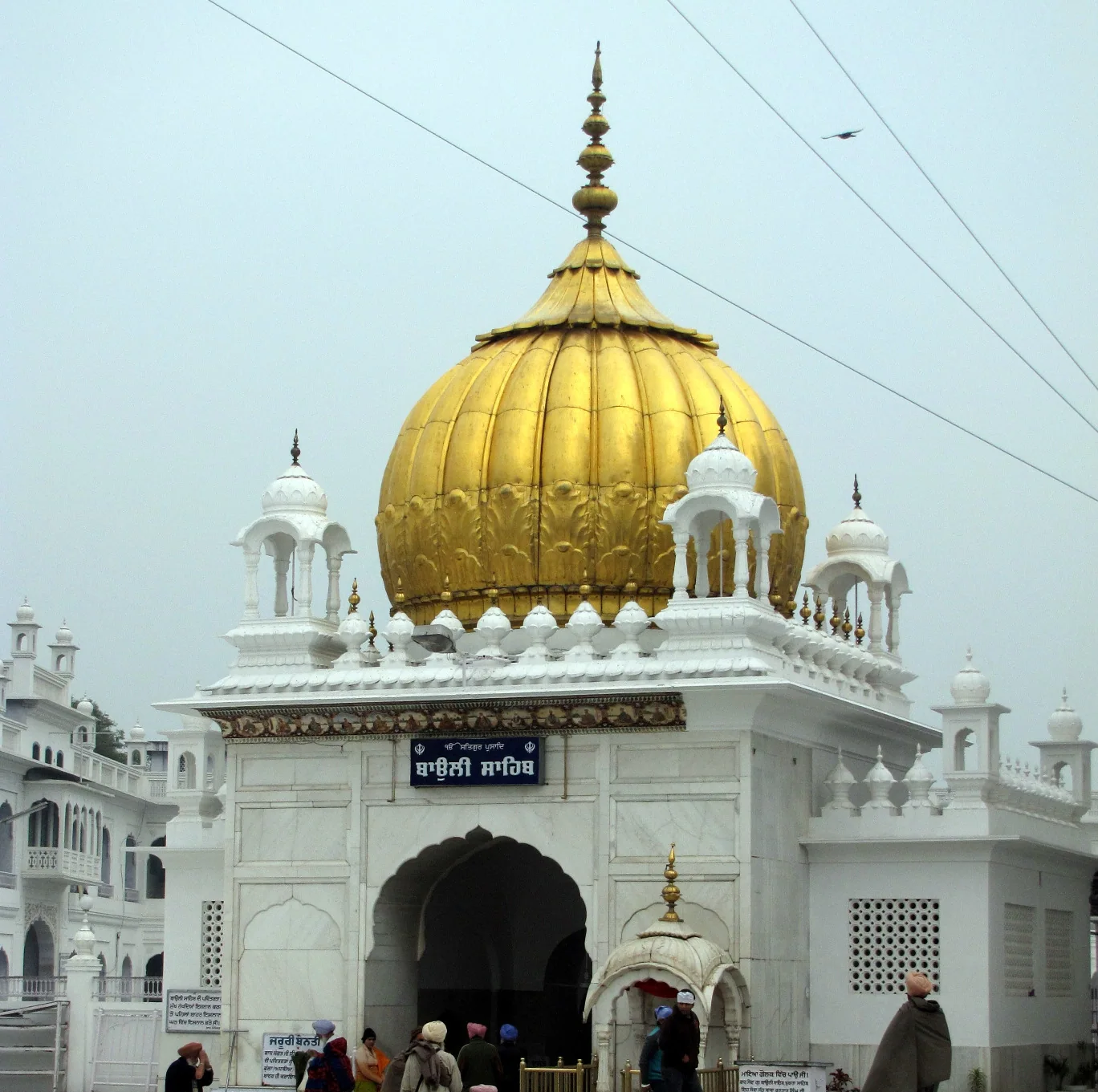
A baoli is a well reached by steps descending towards the water. The government’s Goindwal master plan describes Baoli Sahib’s covered approach and its eighty four steps. It also records painted decoration associated with the entrance. Those details help explain why the landmark is experienced through movement and changing levels, rather than simply viewed from outside like a tower. Consult the Goindwal master plan’s heritage description.
The descent gives a visitor a practical reason to slow down. Look where you are stepping, leave enough space for others and follow the direction of movement indicated on site. If the route is busy, stop only where you will not obstruct people behind you. A photograph should never take priority over someone’s secure footing. Ask locally about access before beginning if you have concerns about balance, fatigue or steps.
An older person or someone with a disability should not be made to feel that completing a staircase is a measure of sincerity. Plan a visit around what is comfortable and possible for each companion. Ask whether there is an appropriate place to wait and how the group can reunite. These details may seem small when planning at home; they become important when everyone is moving at a different pace.
The eighty four steps and devotional tradition
Official tourism writing records the devotional tradition connecting the steps with recitation of Japji Sahib and liberation from the cycle of existence. The master plan also describes this as a belief held by devotees. Such accounts should be presented as religious tradition, not as a result a guide can guarantee. This article neither prescribes a ritual nor promises an outcome from completing it. Tourism account of the Baoli tradition; planning document’s account.
For readers new to the vocabulary, Japji Sahib is a foundational Sikh prayer. Understanding a prayer involves more than knowing how many times it is recited. If the tradition raises questions for you, ask a knowledgeable person who can explain its place within Sikh teaching. Avoid treating a brief travel description as complete religious guidance, particularly when a practice requires preparation, time or physical effort.
The Punjabi word ਪਉੜੀ, pauri, can mean a step. In conversation about this place, the image of taking one step at a time can also become a personal reminder to be attentive. That reflection should remain a reflection. It would be misleading to turn it into a historical saying of Guru Amar Das Ji without a verified source.
Looking at painted stories
The master plan’s description of the Baoli notes painted portraits and scenes connected with the Gurus. Images can encourage questions, especially for younger visitors, but a picture needs context. Ask which episode is represented rather than inventing a story from clothing or gesture. If a sign provides an explanation, read it carefully before giving your own account to someone else. Read the recorded description of the Baoli decoration.
It is also helpful to separate the subject of an image from the date of the painted surface. A depiction of a sixteenth century event is not automatically a painting made in that century. This guide does not date individual artworks or claim that every visible element is original. Appreciating their role in remembrance does not require certainty about details that the sources consulted do not establish.
Making a thoughtful plan
Check the present programme and access arrangements directly before travelling. A public page may preserve a useful historical introduction while its practical details become outdated. Plan enough time for worship, rest and any questions you hope to ask, and keep the return journey manageable. Combining several important places into one day can leave little space to understand any of them.
Cover your head and remove shoes as directed. Keep conversation quiet in prayer areas and avoid photographing people in private moments. If you are visiting with someone unfamiliar with gurdwara practice, explain the basics before arriving so they can enter calmly. There is no need to turn their first visit into an examination of knowledge; guidance offered gently helps everyone feel more at ease.
Continuing the story beyond a landmark
Goindwal can leave a reader with questions about how a community gathers and how shared practices carry meaning across generations. Those questions are a worthwhile starting point for further learning. Explore the gurdwara directory or compare the different focus of Manji Sahib at Alamgir. If preparing a personal design through Meri Sukhna’s customisation page, favour an accurately named place and carefully chosen words over a claim that a devotional act guarantees a result.
Sources & further reading
Historical details are linked to their sources. Devotional traditions are identified as traditions; current arrangements should be confirmed locally.